
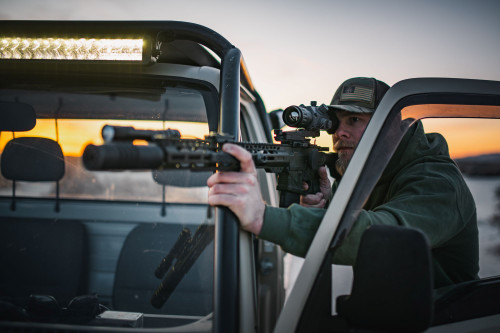
Thermal Imaging for Predator Control: Advanced Scopes and Cameras to Protect Your Livestock
Mar 23rd 2026
Thermal imaging turns unseen nighttime threats into clear, actionable pictures so farms and ranches can spot predators sooner and respond faster. This guide explains how thermal systems work, which nocturnal predators pose the greatest risk, and how to deploy devices to cut losses and improve animal welfare. You’ll get a straightforward breakdown of the technical specs that matter: sensor resolution, NETD/sensitivity, refresh rate, and optical magnification. How those specs translate into real-world detection ranges for coyotes, wild hogs, wolves, and foxes. We then match device categories (thermal scopes, handheld monoculars, and clip-ons) to common farm workflows, show broader agricultural uses like herd health checks and perimeter monitoring, and compare thermal to night vision so you can choose the right solution for your operation. Practical recommendations are highlighted throughout so managers can design patrols, camera layouts, and device choices that reduce predation risk and simplify security routines.
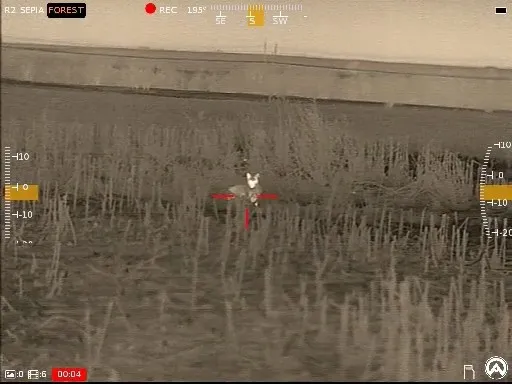
What Are the Main Predators Threatening Livestock at Night?
Effective thermal detection starts with knowing which species are most likely to attack after dark. Each predator presents a different challenge: size, pack behavior, and approach style all affect thermal signature, speed, and stealth. Coyotes, wild hogs, wolves, and foxes demand different sensor resolution and detection range to spot and positively identify them before they reach animals. Understanding peak activity times and typical movement paths helps you place cameras, plan patrol routes, and pick optics with the right magnification and field of view. Below we summarize the primary nocturnal threats and why their behavior matters for thermal deployment and response.
Which Nocturnal Predators Cause the Most Livestock Losses?
Coyotes are often the biggest threat to small stock; they hunt alone or in packs and use cover to approach quietly, so early thermal detection is key. Wild hogs cause heavy damage through group foraging and rooting; large thermal signatures but easily hidden in thick brush until close. Wolves, where present, hunt in coordinated packs and can take larger animals; they require longer detection ranges and confident identification at distance. Foxes mainly threaten poultry and small lambs; they’re smaller and produce weaker heat contrasts, which calls for higher sensor resolution or closer inspection during patrols.
Why Do Traditional Livestock Protection Methods Often Fail?
Fences, guardian animals, and lights help, but each has predictable weak spots that thermal imaging can address when integrated smartly. Fences fail at breach points or where animals dig; guardian animals can be overwhelmed or miss nocturnal incursions; lights can unsettle stock or create glare that masks movement beyond the lit area. Thermal fills those gaps by detecting heat through darkness, light fog, and some vegetation, letting managers find intruders before they reach livestock and direct targeted, often non-lethal, responses. Adding thermal detection to patrol routines and fence inspections builds a layered defense that compensates for the limits of conventional measures.
Common shortcomings of conventional methods that thermal helps solve:
- Patchy night coverage due to limited light and sightlines.
- Systems that degrade without regular maintenance, like fences.
- Non-specific deterrents (lights/noise) that don’t reliably reveal an intruder’s location.
By extending the window for detection, thermal imaging reduces surprise encounters and enables focused responses instead of broad disturbances.
Thermal Cameras: Surveillance, Night Vision, and Broad Agricultural Applications
Thermal cameras passively measure infrared radiation emitted by objects. Initially developed for military surveillance, falling prices have broadened their use across agriculture and other industries. Thermal sensors remove dependence on visible illumination, avoiding the limitations of standard greyscale and RGB cameras. This survey reviews current thermal-camera applications—animals, agriculture, buildings, gas detection, industrial uses, and human detection, tracking, and recognition—while outlining the physics of thermal radiation and camera technology.
Thermal cameras and applications: a survey, R Gade, 2014
How Does Thermal Imaging Revolutionize Predator Detection and Farm Security?
Thermal imaging detects infrared energy and renders animals and people as heat-contrast silhouettes, giving farms visibility regardless of visible-light conditions. Sensors convert temperature differentials into images where warm bodies stand out against cooler backgrounds, enabling night, fog, and partial-vegetation detection. That rapid situational awareness: detection, classification, tracking, lets ranchers verify threats before committing resources and reduces false alarms from non-threatening heat sources. The sections below cover sensor basics and the practical advantages across weather conditions, showing how thermal becomes a force multiplier in farm security planning.
What Is Thermal Imaging and How Does It Detect Heat Signatures?
Thermal systems use focal-plane-array sensors tuned to long-wave infrared (typically 8–14 µm) to register emitted heat and render it as grayscale or colorized images where warmer objects contrast with their surroundings. Higher sensor resolution increases pixels on target, improving shape recognition and motion cues at range; lower NETD (Noise Equivalent Temperature Difference) means better sensitivity to small temperature differences and clearer images in marginal conditions. Refresh rate affects how smoothly moving targets appear and how easy it is to track running animals. Together, these specs determine practical detection and identification ranges on your property and let you match device capability to predator size, behavior, and typical engagement distances.
How Does Thermal Imaging Provide Visibility in All Weather and Lighting Conditions?
Because thermal senses emitted infrared rather than reflected visible light, it works in total darkness; no moonlight or artificial illumination required. In light fog, drizzle, or light snow, thermal often outperforms visible cameras because heat contrast penetrates suspended moisture better than visible light; heavy precipitation and dense particulates will still reduce clarity. Vegetation can hide low-profile animals, but thermal often reveals warm shapes through partial cover sooner than the eye. Thermal doesn’t deliver color or fine texture, so close-range visual confirmation may be needed for species ID. For that reason, many operations use thermal as the primary detection layer and visual cameras for verification where detail matters.
Conditions where thermal typically outperforms visible-light systems:
- Complete darkness with no ambient light.
- Light fog or mist that scatters visible light.
- Partial vegetation cover where heat contrasts show through gaps.
Using thermal as the first-alert tool improves patrol efficiency and reduces reliance on bright lighting, which can harm animal welfare or local wildlife.
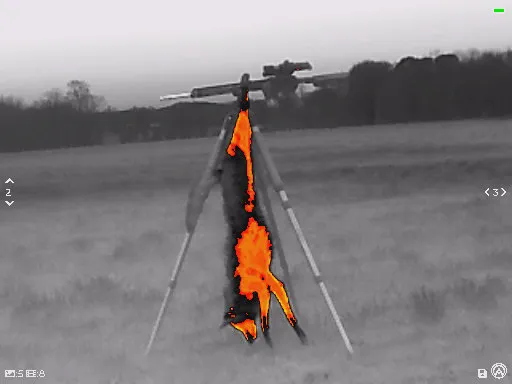
Which Armasight Thermal Devices Are Best for Predator Control and Livestock Protection?
Device category often matters more than brand: thermal scopes deliver precision for targeted responses, handheld monoculars enable fast, mobile scans, and clip-ons convert existing optics for flexible use. Each category maps to common deployment patterns: fixed surveillance, vehicle or foot patrols, and mounted rifles for humane removal where legal. So your choice depends on desired detection range, identification detail, and workflow. The table below pairs representative Armasight models with key sensor attributes and typical farm use-cases to help match capability to need.
This table compares thermal product categories and typical farm deployments.
| Product Category | Representative Armasight Model | Typical Sensor / Magnification | Primary Farm Use Case |
|---|---|---|---|
| Thermal Scope | Contractor 640 3-12x50 Thermal Weapon Sight | 640×480 sensor / 3–12× optical | Precision predator control at distance; mounted patrol rifles |
| Handheld Monocular | Sidekick 320 Mini Thermal Monocular | 320×240 sensor / fixed low mag | Mobile vehicle and foot patrol scans; quick checks of pens |
| Portable Monocular | Warden 640 2-8x35 Thermal Monocular | 640×480 sensor / 2–8× optical | Extended-range spotting and identification during surveys |
Higher-resolution monoculars and scopes extend detection and identification ranges; compact monoculars trade some range for portability and faster scanning in routine patrols.
What Are the Benefits of Thermal Scopes for Precision Predator Hunting?
Thermal scopes convert distant heat sources into clear aiming references, allowing trained operators to confirm species, assess threat level, and take humane, precise action when required. With magnified thermal imaging and proper ballistic mounting, shooters can read size and posture at longer ranges, lowering mistaken-identity risk and enabling intervention before predators reach livestock. Scopes with higher-resolution sensors and stable refresh rates provide smoother tracking and better silhouette recognition, which supports legal and ethical removal when it’s part of a managed protection plan. The precision of thermal scopes also reduces non-target disturbance compared with broad, indiscriminate deterrents.
How Do Thermal Monoculars Enhance Mobile Ranch Surveillance?
Handheld monoculars are built for rapid scanning; ideal for vehicle-based patrols and on-foot checks across large properties. Their portability encourages frequent use as part of standard routine. Higher-resolution monoculars detect smaller predators at greater distances while keeping mobility high. Battery life and ergonomics matter: long runtimes and comfortable, one-handed operation keep patrols efficient. Compact designs make it easy to carry and deploy quickly at a suspected intrusion. Regular thermal patrols create predictable detection patterns that deter repeat incursions and give managers timely situational awareness for coordinated responses.
Why Choose Thermal Clip-Ons for Versatile Predator Detection?
Thermal clip-ons let you convert existing day optics into thermal-capable systems, keeping familiar reticle setups and allowing quick switch-over between day and night roles without replacing primary scopes. Clip-ons are cost-effective for operations that already own quality day optics and need thermal seasonally or intermittently, providing flexibility for mounted patrol rifles and multiple platforms. Integrated thermal scopes can offer tighter optical alignment and simpler operation, but clip-ons protect your investment by enabling thermal use across rifles. For many ranchers, clip-ons are a practical first step to adding thermal capability where a dedicated thermal scope isn’t necessary.
- Quick summary: clip-ons deliver flexibility, cost efficiency, and cross-platform compatibility.
How Can Thermal Imaging Support Broader Agricultural Applications Beyond Predator Control?
Thermal systems bring value to many farm workflows beyond predator detection: they reveal animal health indicators, strengthen perimeter security, and scale monitoring via drone surveys. Thermal helps spot elevated body temperature, hotspots associated with lameness, and clustering behavior that can signal emerging problems; supporting earlier intervention and herd-health protocols. For perimeter security, fixed thermal cameras create reliable detection zones with fewer false alerts and integrate with alarms for faster dispatch. Below is a practical mapping of common agricultural applications to benefits and example outcomes to help prioritize investment.
This table links thermal applications to measurable benefits and example outcomes.
| Application | Benefit | Example/Metric |
|---|---|---|
| Livestock health screening | Early detection of fever or inflammation | Flag elevated temperature spots during routine scans |
| Perimeter surveillance | Night-time detection of intruders/equipment theft | Detection zones that shorten response time by minutes |
| Drone-mounted surveys | Rapid coverage of large pastures | Scan hundreds of acres per flight for heat anomalies |
| Asset protection | Locate warm-running equipment or unauthorized personnel | Reduce downtime with faster detection of overheating machinery |
These examples show how one thermal investment can deliver multiple operational returns—better animal welfare and stronger property security.
How Does Thermal Imaging Help Monitor Livestock Health?
Thermal cameras reveal relative temperature differences across animals, highlighting hotspots that may indicate fever, localized infection, or inflammation before clinical signs appear. Routine scans of high-risk groups: new arrivals, birthing pens, or animals with prior issues. Establish baselines and make deviations easier to spot, helping vets and managers prioritize examinations. Thermal is a screening tool, not a standalone diagnostic, but it speeds triage and can cut labor and medication costs by catching problems earlier. Integrating thermal into daily or weekly health checks strengthens herd-level surveillance and complements clinical exams.
What Role Does Thermal Imaging Play in Farm Perimeter and Asset Security?
Fixed thermal cameras and scheduled patrols create persistent detection coverage that identifies people or vehicles moving in restricted zones, even in total darkness—reducing theft, vandalism, and unauthorized access. Effective placement focuses on likely ingress points, equipment storage areas, and shadowed approaches where predators or intruders exploit cover; pairing sensors with analytics or alarm triggers speeds decision-making. Mobile patrols with monoculars bridge gaps between camera fields and verify alerts, lowering false positives and improving dispatch accuracy. Together, fixed and mobile thermal layers form a scalable security system that protects animals and assets while minimizing unnecessary disturbance.
- Perimeter placement best practices: Cover likely approach corridors and fence weak points. Elevate cameras to widen fields of view and reduce vegetation blockage. Integrate detection zones with alarm workflows for rapid verification.
These steps help create a layered security posture where thermal detection guides targeted, resource-efficient responses instead of constant high-resource patrolling.
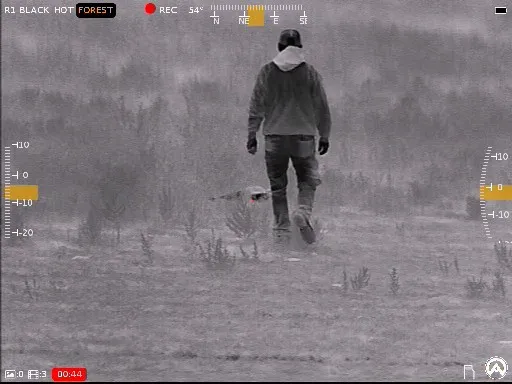
What Factors Should Farmers and Ranchers Consider When Choosing Thermal Imaging Devices?
Picking the right thermal device means balancing technical performance, operational practicality, and long-term support to match on-farm roles like patrols, fixed surveillance, or weapon-mounted use. Key technical features include sensor resolution, NETD (thermal sensitivity), refresh rate, optical magnification, and detection range; operational traits include battery life, mounting compatibility, and weatherproofing. The table below translates those features into practical buying guidance so you can choose equipment that meets the detection and identification needs of your local predator profile and working conditions.
Below is a technical feature to recommendation mapping to aid purchase decisions.
| Technical Feature | How It Affects Predator Detection | Practical Recommendation |
|---|---|---|
| Sensor resolution | Higher resolution improves identification at longer ranges | Choose 640×480 for reliable identification beyond 300–400 m |
| NETD / sensitivity | Lower NETD reveals smaller temperature differences | Seek low NETD for detection through partial cover or small predators |
| Refresh rate (Hz) | Smooth tracking of moving animals | 30 Hz or higher for fast-moving targets |
| Optical magnification | Balances field of view and target detail | Variable magnification for adaptable patrols and fixed points |
Which Technical Features Impact Thermal Device Performance?
Sensor resolution determines how many pixels represent a target at range and directly affects when you can merely detect versus confidently identify a predator. NETD measures sensitivity; lower values mean the sensor separates smaller temperature differences, improving detection in light fog or when an animal’s contrast is subtle. Refresh rate governs motion fluidity and tracking of running animals; low refresh rates make motion appear choppy and can hide important cues. Knowing these relationships lets you pick devices that match typical engagement distances and the predator species you face.
What Are Expert Recommendations for Selecting the Best Thermal Optics for Predator Control?
Small operations that need frequent, flexible detection should consider compact handheld monoculars with good sensitivity and moderate resolution for an affordable, high-utility option. Mid-size and larger ranches benefit from a mix: fixed perimeter thermal cameras for persistent coverage plus higher-resolution handhelds and scopes for rapid verification and precision identification. Where weapon-mounted intervention is lawful and necessary, integrated thermal scopes or quality clip-ons with stable magnification and adequate resolution enable humane, accurate engagements at distance; prioritize service and warranty support for long-term reliability. Match device tiers to your workflow and plan for battery and maintenance logistics when you buy.
- Purchasing checklist summary: Define your primary use-case: patrol, fixed monitoring, or precision intervention. Prioritize sensor resolution and NETD for the engagement distances you expect. Confirm mounting, battery, and support logistics to fit your routines.
Armasight’s Contractor, Sidekick, and Warden product families occupy different spots on this spectrum. Contractor for rifle-mounted precision, Sidekick for ultra-portable patrol scans, and Warden for extended-range monocular spotting, offering options to match the tiers above.
How Does Thermal Imaging Compare to Night Vision for Ranch Security and Predator Control?
Thermal imaging and night vision rely on different physics; thermal senses emitted infrared heat while night vision amplifies available visible and near-IR light. So, each has distinct strengths and limitations for detecting and identifying nocturnal predators. Thermal excels at detection in total darkness, light fog, and through partial cover; night vision provides richer contextual detail and near-photographic scenes when ambient light or IR illumination is present. The right choice depends on whether you prioritize raw detection under adverse conditions or finer visual identification and behavior observation where some light exists. Many ranch systems combine both to take advantage of thermal’s detection and night vision’s contextual detail.
What Are the Key Differences Between Thermal Imaging and Night Vision Technologies?
Thermal senses heat and is largely independent of ambient light, making it effective in no-light situations and through some obscurants. Night vision amplifies small amounts of visible or near-IR light and gives more detail when light is available. Thermal highlights warm bodies but lacks color and fine texture, which can make distant species ID harder; night vision preserves background detail and patterns but performs poorly in fog or total darkness. Operational needs differ too; thermal priorities include resolution and sensitivity, while night vision centers on gain control and IR-illumination compatibility. These differences guide whether you prioritize detection (thermal), contextual ID (night vision), or a combined approach.
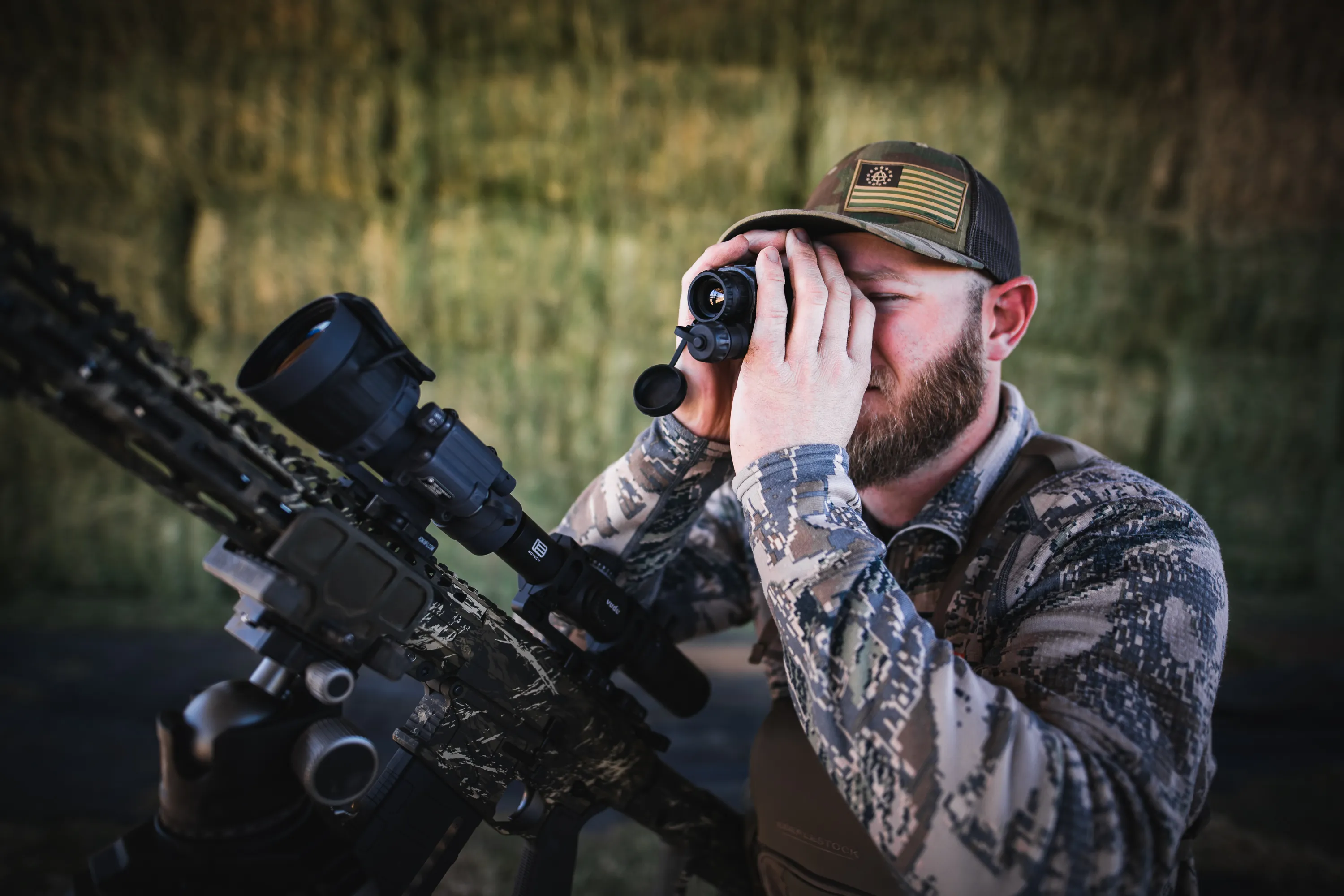
Which Is More Effective for Protecting Livestock at Night?
For most livestock-protection scenarios where early detection in varied weather and lighting is the priority, thermal should be the primary technology because it reliably reveals warm-bodied predators beyond the reach of visible-light systems. Night vision is a strong complement where visual detail matters and ambient light exists, or when used alongside thermal to confirm species before action. Creating a detection and identification workflow. In practice, farms often deploy thermal for perimeter detection and patrols while keeping night vision or visual cameras for close-range confirmation and recording. That layered approach maximizes detection windows and reduces mistaken responses. Where possible, choose devices and mounts that support both thermal detection and visual confirmation for the most resilient setup.
If you’re ready to evaluate thermal options that align with these recommendations, Armasight offers a range of thermal scopes, monoculars, and clip-ons designed for reliability, ease of use, and ongoing innovation; suited to the detection, patrol, and precision roles described in this guide. Their product families can help implement the layered, spec-driven approach while fitting into existing patrol and surveillance workflows.
- Thermal-first detection: Use thermal devices as the primary alerting layer.
- Night vision for confirmation: Add night vision or visual cameras where identification detail is needed.
- Layer and integrate: Combine fixed cameras, mobile monoculars, and precision scopes based on use-case.
Conclusion
This guide covered predator behavior, how thermal works, device categories, broader agricultural uses, buying criteria, and a comparison with night vision to help you build an effective livestock-protection plan. For implementation, match device mixes to your property size and typical predator distances, schedule patrols that make the most of thermal scanning efficiency, and use routine-scan data to refine camera placement and response protocols.
For more information on rugged, American-built thermal optics and to determine which device category best fits your operation, Armasight’s thermal scopes, monoculars, and clip-ons offer proven options aligned with the roles described here.
Frequently Asked Questions
What are the key advantages of using thermal imaging over traditional surveillance methods?
Thermal imaging detects heat signatures in complete darkness, light fog, and light rain conditions where visible-light cameras struggle. Because it doesn’t rely on ambient light, thermal provides consistent 24/7 detection and can see through some vegetation, giving earlier notice of intruders or predators. That earlier detection improves situational awareness and helps you respond more quickly and accurately to threats, ultimately protecting livestock and property more effectively.
How can thermal imaging be integrated into existing farm security systems?
Thermal cameras can be installed at strategic points: entry gates, pens, storage areas and tied into alarm systems for instant alerts when heat signatures appear. Mobile thermal monoculars add verification capability for patrol teams. Combining thermal with existing measures like fencing and lighting creates a layered system: thermal for initial detection, visual cameras or patrols for confirmation, and traditional barriers for containment. This multi-layer approach maximizes protection while reducing false alarms and unnecessary disturbance.
What maintenance is required for thermal imaging devices?
Routine maintenance is straightforward: keep lenses clean and dry, install software updates when available, and maintain batteries, store spares charged and replace aging packs before patrols. Regular visual inspections for physical damage and weather seals will catch issues before they affect performance. Following the manufacturer’s care guidelines and scheduling periodic checks keeps devices reliable during critical monitoring periods.
Can thermal imaging help in detecting livestock health issues?
Yes. Thermal imaging reveals relative temperature differences that can flag fever, localized infection, or inflammation before clinical signs are obvious. Regular scans help you build temperature baselines for groups and spot outliers quickly, enabling faster veterinary intervention and reducing spread. Remember: thermal is a screening tool, not a diagnosis; use it to prioritize examinations and speed triage.
What are the limitations of thermal imaging technology?
Thermal is powerful but not perfect. It doesn’t show color or fine texture, so long-range species identification can be difficult. Heavy rain, dense fog, or high ambient temperatures that reduce contrast will degrade performance. Thermal is best used as part of a layered approach; detection first, paired with visual confirmation where fine detail or behavioral observation is required.
How do I choose the right thermal imaging device for my farm?
Start with your primary use case: do you need handheld patrol tools, fixed perimeter cameras, or weapon-mounted precision? From there, prioritize sensor resolution and NETD for the detection ranges you expect, and factor in battery life, mounting compatibility, and weatherproofing. If you’re unsure, consult product specs and talk to a specialist to align features with your predator profile and daily workflows.