
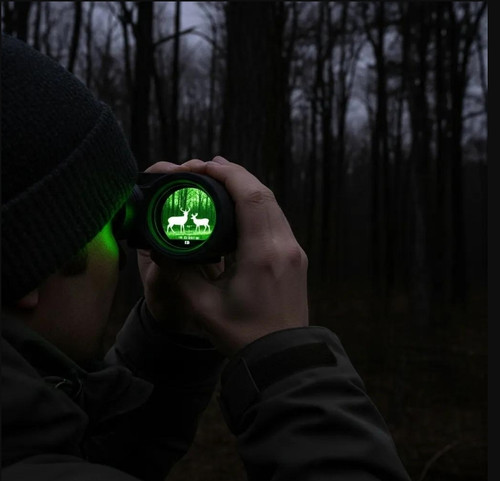
How Thermal Monocular Technology Enhances Night Visibility for Professional and Outdoor Use
Apr 3rd 2026
Thermal monoculars convert infrared radiation into visible imagery, enabling reliable observation when visible light is absent. This article summarises key features, operational benefits, core technology, and representative use cases for law enforcement, military, search and rescue, and outdoor professionals.
Features of Thermal Monoculars
Modern thermal monoculars are compact, rugged, and configurable to suit field tasks.
- Heat Detection: Detects infrared emissions to reveal heat signatures in darkness.
- Portability: Lightweight, pocketable designs for mobile use.
- Durability: Rugged, weather-resistant housings for harsh environments.
- High-Resolution Imaging: Sensors that improve recognition and situational assessment.
- Adjustable Settings: Brightness, contrast, and palettes to optimise visibility.
Benefits of Thermal Monoculars
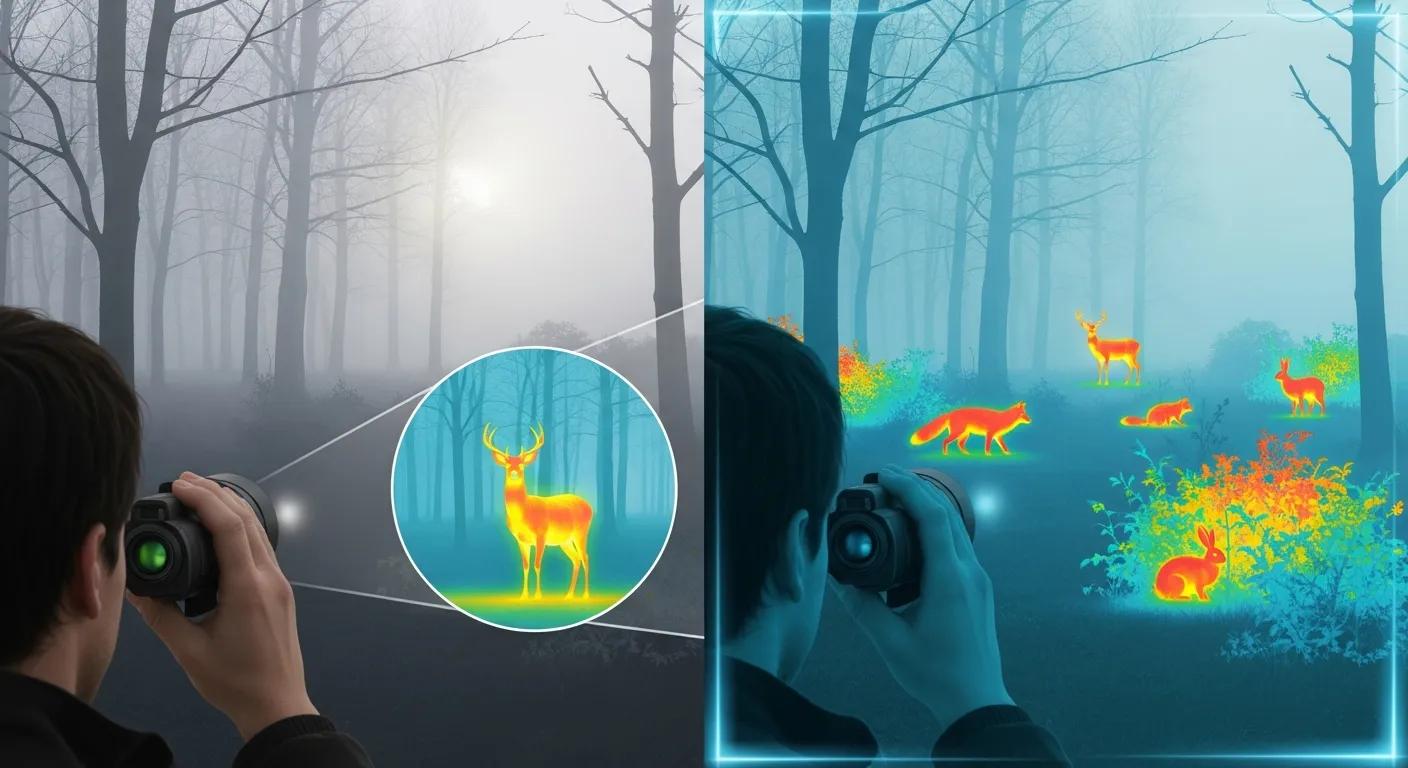
Thermal monoculars extend capability beyond simple night vision by offering consistent detection and faster recognition in degraded conditions.
- Enhanced Night Vision: Operate in complete darkness without illumination.
- Obscurant Penetration: Maintain visibility through fog, smoke, and light rain.
- Faster Detection: Rapidly highlight persons, animals, and equipment by heat contrast.
- Safety and Hazard Detection: Reveal terrain hazards, wildlife, and obstacles at night.
- Ethical Hunting Practices: Improve tracking while reducing disturbance to animals.
Armasight and similar specialists offer thermal monoculars tailored to outdoor enthusiasts, military, law enforcement, and security professionals.
Practical Use Cases
Thermal monoculars are adaptable across scenarios where low-light detection matters.
One notable application in wildlife management illustrates thermal imaging effectiveness in detecting animals within dense or low-visibility habitat.
Thermal Imaging for Enhanced Wildlife Management & Culling
Helicopter-based shooting is an established management method for large vertebrate pest species; however, locating animals in low-density populations or within dense habitat is challenging visually. Thermal-imaging increased detections under those conditions. In a 2021 South Australia aerial culling operation for feral pigs (Sus scrofa) and fallow deer (Dama dama), thermal-imaging equipment configured with a dedicated helicopter crew was employed. Seventy-two percent of pigs and 53% of deer were first detected in dense canopy or tall forest habitat. Median time from the first impact shot to incapacitation was < 12 s. The culling rate (animals hour−1) doubled compared to visual shoots over the same populations and the wounding rate was zero, yielding an incapacitation efficiency of 100%.
Thermal aerial culling for the control of vertebrate pest populations, TE Cox, 2023
- Search and Rescue: Locate missing people in darkness or poor visibility.
- Wildlife Observation: Observe nocturnal animals with minimal disturbance.
- Law Enforcement and Security: Night surveillance, perimeter checks, and suspect detection.
- Hunting: Track game and improve recovery while following local regulations.
- Military Applications: Tactical reconnaissance and movement detection at night.
What Is Thermal Monocular Technology and How Does It Work?
Thermal monoculars sense infrared radiation and render temperature differences as a monochrome or palette-based image, enabling detection without visible light.
The microbolometer is the core sensor; onboard signal processing converts detector output into the displayed thermal image, emphasising contrasts that reveal people, animals, or equipment.
Components of Thermal Monoculars
Primary elements determine capability and reliability:
- Microbolometer: Detects incident infrared energy.
- Internal Electronics: Signal processing, image rendering, and controls.
- Display Screen: Presents the processed thermal image to the operator.
- Durable Design: Weather sealing and impact resistance for field use.
How Thermal Monoculars Work
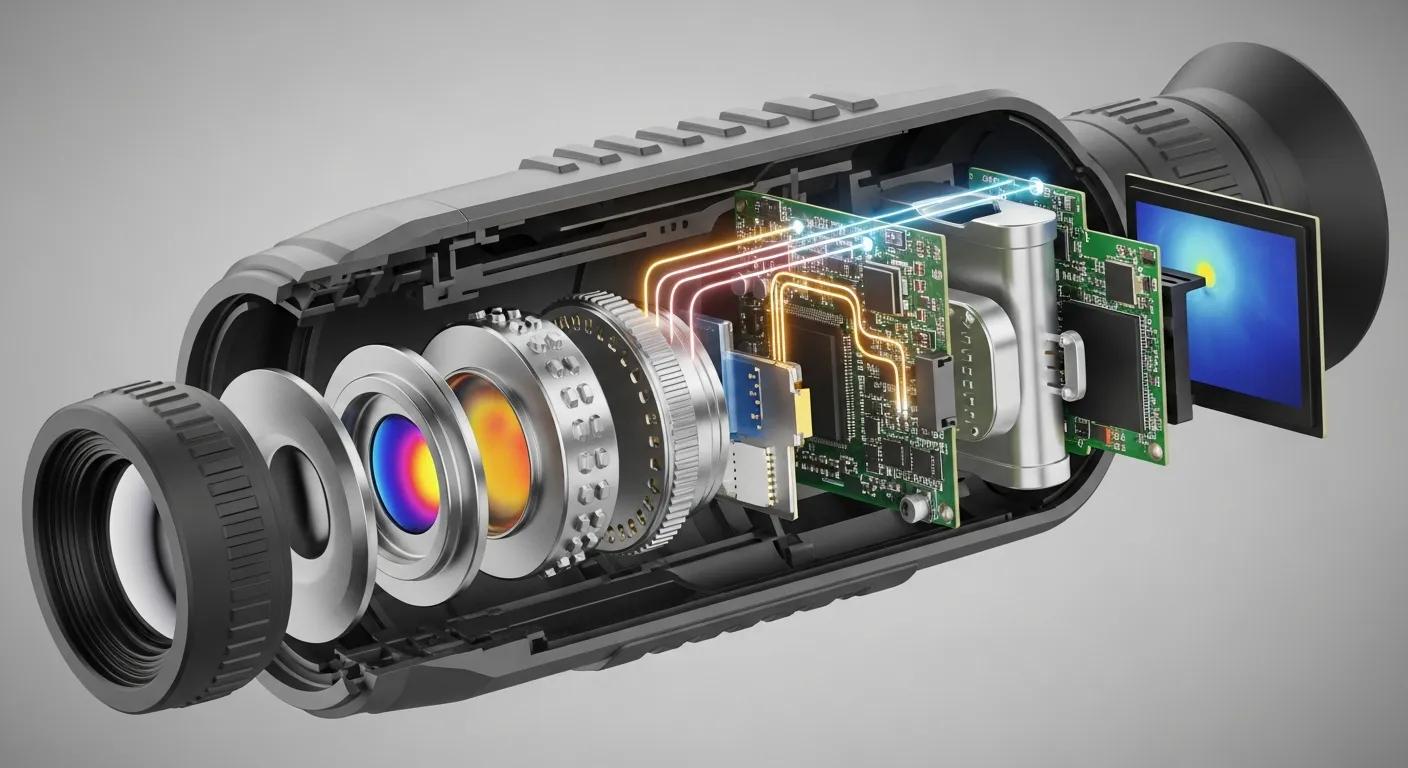
The microbolometer detects infrared emissions and converts them to electrical signals. Processing electronics map those signals into visible pixels on the display.
Users adjust brightness, contrast, and display palettes to improve clarity for specific conditions, which enhances situational awareness in low-light environments.
Applications
Common applications include:
- Hunting: Tracking and recovery in low light.
- Surveillance: Security monitoring without illumination.
- Search and Rescue: Rapid detection of warm bodies.
- Wildlife Observation: Nocturnal study with reduced disturbance.
Enhancing Night Visibility
By rendering heat signatures that are invisible to the unaided eye, thermal monoculars enable identification of persons and objects in total darkness.
They retain effectiveness through many obscurants such as fog and smoke, maintaining operational awareness where optical systems struggle.
Peer-reviewed research corroborates the capacity of thermal monoculars to maintain visibility where conventional optical methods are impeded by environmental obscurants.
Handheld Thermal Monoculars for Obscurant Penetration
Infrared (IR) vision can, to a degree, penetrate such obscurants. The works in [15, 16] report results for hand–held monocular SLAM and visual odometry using thermal
Thermal-inertial localization for autonomous navigation of aerial robots through obscurants, C Papachristos, 2018
Why Is Thermal Monocular Durability Important for Tactical and Outdoor Use?
Durability ensures devices remain functional in demanding conditions and extend service life for users operating in critical environments.
Key durability factors include IP rating for dust/water, robust materials to resist impact, and an operating temperature range suitable for intended climates.
Which Use Cases Demonstrate the Effectiveness of Thermal Monoculars at Night?
Thermal monoculars perform well where heat contrast exists and in obscured or low-light conditions, making them valuable for safety, observation, and tactical detection.
- Heat Detection: Locate warm bodies and objects by temperature contrast.
- Performance in Obscurants: Preserve visibility in fog, smoke, or low cloud.
- Wildlife Observation and Hunting: Improve detection and tracking after dark.
How Do Military and Law Enforcement Professionals Utilize Thermal Monoculars?
Professionals use thermal monoculars for suspect detection, perimeter monitoring, and search-and-rescue during night operations to increase situational awareness and safety.
- Suspect Detection: Reveal hidden persons in darkness.
- Perimeter Monitoring: Continuous low-light area checks.
- Search and Rescue Operations: Rapidly locate individuals in distress.
What Advantages Do Outdoor Enthusiasts Gain from Thermal Imaging Devices?
Outdoor users benefit from detection without light, continued performance through obscurants, and improved recovery or tracking of game.
- Detection in Total Darkness: See without active illumination.
- Performance Through Obscurants: Function in fog and light precipitation.
- Faster Game Recovery: Locate wounded or lost game more quickly.
What Are the Essential Features to Consider When Choosing the Best Thermal Monocular Device?
Select based on resolution, detection range, battery life, and ergonomics to match intended use: hunting, surveillance, or tactical work.
- Resolution: Determines image clarity and identification capability.
- Detection Range: Affects how far targets can be identified.
- Battery Life: Supports extended operations.
How Do Thermal Sensor Resolution and Detection Range Affect Performance?
Higher sensor resolution yields clearer images; greater detection range allows earlier identification at distance; both are critical for tactical and wildlife applications.
- Sensor Resolution: Better detail and identification.
- Detection Range: Longer standoff distances for safety and planning.
What Maintenance Practices Ensure Long-Term Reliability of Thermal Monoculars?
Routine care preserves performance: clean optics, store in a protective case, and perform regular functional checks per manufacturer guidance.
- Regular Cleaning: Keep lens and body free of debris.
- Proper Storage: Use a padded case to avoid damage.
- Routine Checks: Inspect electronics, seals, and battery condition.
Different models balance features and trade-offs to meet user requirements.
| Feature | Description | Benefit |
|---|---|---|
| Heat Detection | Detects infrared radiation | Enables visibility in darkness |
| Portability | Lightweight and compact | Easy to carry for outdoor use |
| Durability | Rugged construction | Reliable in harsh conditions |
This comparison summarises core capabilities of thermal monoculars and how they support operational effectiveness across environments.
For further technical information, review the range of thermal imaging solutions available from leading providers.
Complementary night vision technologies offer alternative approaches for low-light visibility and can be evaluated alongside thermal solutions.
Armasight provides a selection of thermal and night-vision systems to meet diverse operational requirements.
Frequently Asked Questions
What is the difference between thermal monoculars and traditional night vision devices?
Thermal units detect heat (infrared) and work in absolute darkness and through some obscurants; traditional night vision amplifies available light and is less effective with no light or heavy obscurants.
How do I choose the right thermal monocular for my needs?
Prioritise resolution, detection range, battery life, and ergonomics, and match features to your primary use: hunting, surveillance, or tactical work.
Can thermal monoculars be used in adverse weather conditions?
Many models function in fog, smoke, and light rain, but extreme conditions can still reduce contrast; choose devices with suitable IP ratings for harsh environments.
What maintenance is required for thermal monoculars?
Routine cleaning, secure storage, and regular inspections preserve image quality and device longevity; follow manufacturer maintenance instructions.
Are thermal monoculars suitable for wildlife observation?
Yes, thermal imaging detects animals without visible light, reducing disturbance; users should follow ethical guidelines and local laws.
What are the limitations of thermal monoculars?
They are less effective on low-heat or ambient-temperature objects, can be affected by heavy precipitation or atmospheric conditions, and do not provide natural colour information.
How do thermal monoculars enhance safety during outdoor activities?
By revealing hazards; wildlife, terrain obstacles, or other threats in low light, thermal monoculars improve situational awareness and reduce accident risk.
Conclusion
Thermal monoculars significantly improve night visibility by detecting heat signatures and maintaining performance through many obscurants. Their compact, durable designs and configurable imaging make them valuable for professionals and outdoor users. Choose a model with the resolution, range, and battery life suited to your operational needs to maximise effectiveness and safety.