
Benefits of Thermal Monoculars You Didn’t Know Existed: Real-World Advantages and Uses
Feb 18th 2026
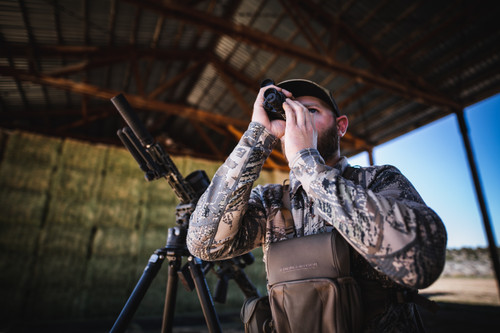
Thermal monoculars read heat instead of relying on reflected visible light, so you can find people, animals, hazards, and thermal contrasts in total darkness and through many common obscurants. This guide walks through surprising, practical, and ethical advantages of portable thermal monoculars, explains where they outperform conventional optics, and outlines what to consider when selecting a device. You’ll learn how thermal detection works, why thermal monoculars reveal terrain hazards and wounded game, how they assist law enforcement and security teams, and when to choose thermal over night vision. Each section includes short, scenario-driven examples and clear decision guidance so you can match device capabilities to real-world needs. At the end, brief Armasight product examples show how those advantages translate into purchase choices for outdoorspeople, hunters, and professionals.
What Are the Surprising Benefits of Using Thermal Monoculars?
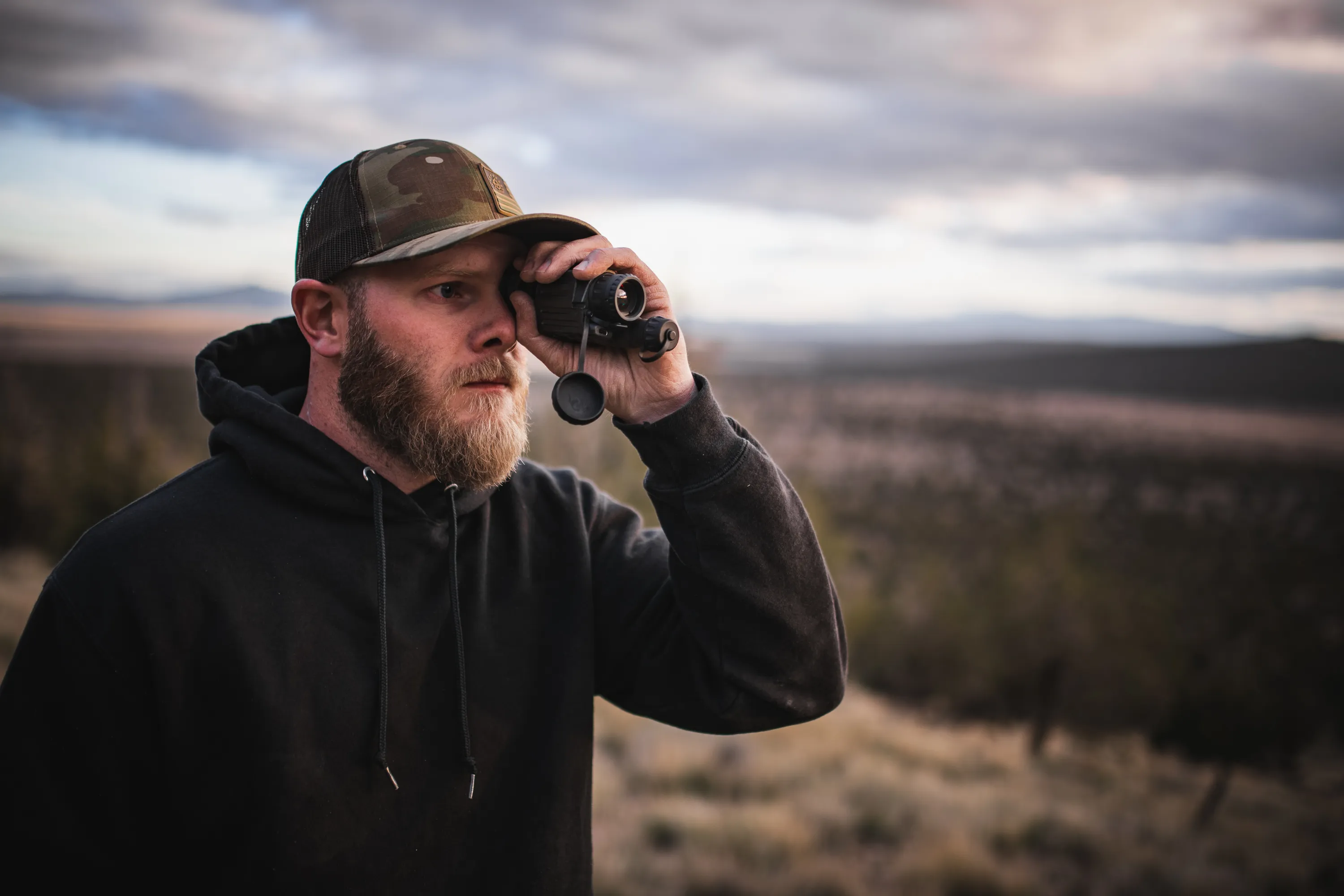
Thermal monoculars use sensors that detect infrared radiation from objects and living beings, converting temperature differences into a clear image that highlights targets regardless of available light. Beyond the familiar “see in the dark” benefit, thermal imaging delivers several often-overlooked advantages: spotting terrain hazards, locating wounded game quickly and humanely, and giving early predator alerts at dawn or dusk. Improvements in microbolometer technology and image processing have increased sensitivity and detection range, boosting situational awareness in confined or obscured environments. The sections that follow explain how thermal sensors improve night performance and cut through common obscurants, then summarize the most actionable benefits.
Put simply: thermal monoculars offer hazard detection, low-profile observation, and faster search results. The next examples show how that plays out at night and in obscured conditions.
| Device | Capability | Practical Benefit |
|---|---|---|
| Thermal monocular | Heat detection | Reveals signatures in darkness and through light fog or foliage |
| Thermal monocular | Portability | Handheld and lightweight for rapid scanning and easy carry |
| Thermal monocular | Safety | Exposes terrain hazards, animals, and people when visibility is poor |
How Do Thermal Monoculars Enhance Night Vision and Low Light Performance?
Thermal monoculars detect emitted infrared energy instead of amplifying ambient photons, so their performance doesn’t depend on starlight or moonlight. That makes them reliably effective at detecting warm-bodied targets in total darkness and gives users fast situational awareness where human sight and traditional night-vision gear struggle. For example, a search team can find a person hidden behind tree cover more quickly because body heat stands out against a cooler background. That fundamental difference explains why thermal devices are preferred for search-and-rescue and rapid night patrols.
These same detection mechanics also affect how thermal monoculars perform against obscurants like fog and smoke, which we cover next.
In What Ways Can Thermal Monoculars Detect Heat Signatures Through Fog, Smoke, and Foliage?
Long-wave infrared behaves differently than visible light when it meets aerosols and vegetation: it penetrates light fog and thin smoke more effectively, revealing thermal contrast where visible optics scatter. In light-to-moderate fog or thin foliage, thermal imaging will show silhouettes and moving animals clearly, though dense smoke, heavy rain, or extreme precipitation will reduce effective range. Practical tips: angle your scans to use cooler backgrounds for better contrast and close the distance when conditions thicken to improve resolution. Knowing these limits helps you set realistic expectations for detection range and identification.
Understanding these strengths and limits leads directly into how hunters and wildlife observers can use thermal tools both effectively and ethically.
How Do Thermal Monoculars Improve Hunting and Wildlife Observation?
For hunters and wildlife observers, thermal monoculars act as early-warning and ethical-recovery tools: they reveal animals that are camouflaged, inactive, or hidden, which improves safety and supports humane outcomes. By converting heat into clear contrast, a thermal device shortens tracking time for wounded game and enables faster, more accurate recoveries that reduce suffering. For pre-hunt scouting, quick thermal sweeps reveal movement patterns and congregation areas without intrusive setup. The following sections outline ethical tracking steps and scouting workflows that turn sensor capabilities into practical hunting advantages.
The table below maps common hunting needs to the device attributes that matter most.
| Hunting Use-Case | Key Feature | Benefit |
|---|---|---|
| Spotting camouflaged game | Sensor resolution & detection range | Quicker initial detection at night or in cover |
| Wounded-game recovery | High sensitivity (low NETD) | Finds faint residual heat for humane recovery |
| Pre-hunt scouting | Portability & battery life | Fast area scans without heavy gear |
How Do Thermal Monoculars Help Spot Camouflaged and Wounded Game Ethically?
Ethical tracking is about finding wounded animals quickly to limit suffering; thermal monoculars reveal faint residual heat where visual cues are absent. Scenario: after a dusk shot, an observer uses a handheld thermal to sweep low brush and finds a warm patch that a visual search missed, then approaches for a humane recovery. Important features to consider are detection range appropriate to your terrain, low NETD for sensitivity, and battery life that covers retrieval efforts. Following a simple protocol—note the last seen position, use systematic thermal sweeps, then approach cautiously—turns sensor advantages into responsible field action.
Those same practices complement pre-hunt scouting, discussed next.
What Are the Advantages of Thermal Monoculars for Pre-Hunt Scouting and Predator Control?
Thermal monoculars speed scouting by letting you perform quick, non-intrusive surveys of fields, water sources, and travel routes at dawn or dusk, showing animal distribution without disturbing wildlife. For predator control, focused night scans can locate coyotes or nuisance animals to protect property while minimizing disruption to non-target species. Two practical examples: replace repeated daytime walks with a single predawn thermal sweep to map activity, or use handheld scans to check fence lines for recent incursions. For scouting, prioritize a lightweight form factor, dependable battery life, and a comfortable grip for extended use.
These hunting and scouting advantages make several Armasight multifunctional models worth considering for serious outdoorspeople.
As a purchase cue, Armasight offers compact, quick-scan handhelds for scouting and higher-resolution, multi-magnification models for recovery and identification in more varied terrain. Compare sensor sensitivity, detection range, and portability to match the device to your primary hunting workflow.
What Critical Advantages Do Thermal Monoculars Offer for Law Enforcement and Security?
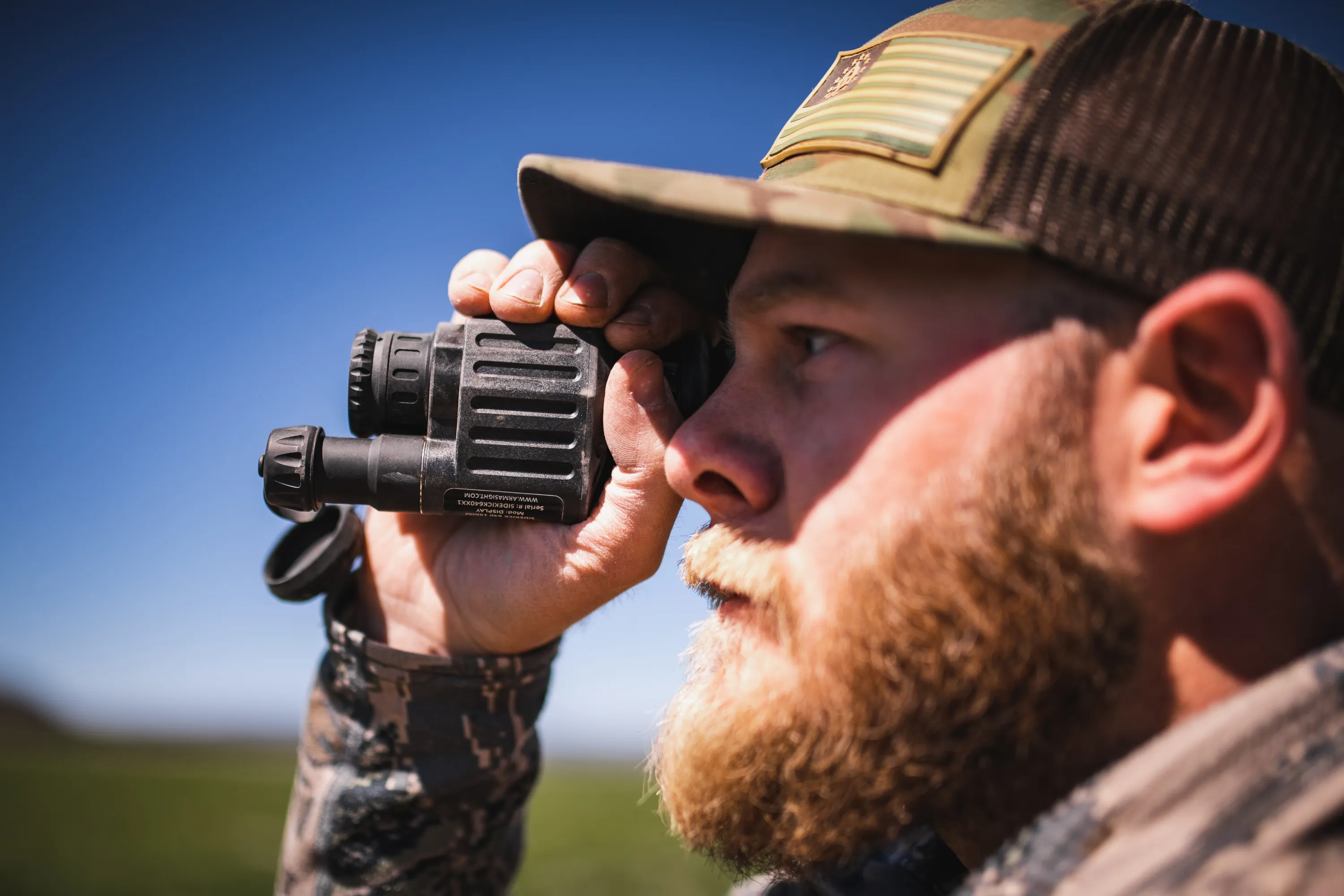
For law enforcement and security teams, thermal monoculars speed suspect detection, cut false alarms in perimeter monitoring, and improve situational awareness during night operations by highlighting living targets and warm vehicles. Detecting heat contrasts through light obscurants enhances officer safety by revealing hidden persons and potential ambush points before close contact. Operational benefits include faster room and area clearance during searches and improved evidence-location capabilities after incidents, since recently handled objects or engines retain thermal signatures. The following subsections cover suspect-detection tactics and perimeter workflows tied to device criteria.
These tactics align with established best practices and help shape procurement decisions in professional settings.
| Operational Task | Key Device Attribute | Operational Benefit |
|---|---|---|
| Suspect detection | Detection range & refresh rate | Faster acquisition of moving targets |
| Perimeter monitoring | Battery life & weather resistance | Continuous coverage with minimal upkeep |
| Evidence recovery | Thermal sensitivity | Locates recently handled objects or warm engine components |
How Do Thermal Monoculars Assist in Suspect Detection and Surveillance at Night?
Thermal monoculars speed suspect detection by turning living heat signatures into clear visual contrasts, cutting time-to-acquire versus visible-light sweeps and reducing false positives from inanimate objects. Surveillance teams pair handheld scans with patrol patterns and dedicated observation points to cover blind spots and verify motion-triggered alarms quickly. Best practices include scanning from elevated positions, combining slow pans with short dwells to assess anomalies, and keeping clear verification and approach protocols. These methods enhance safety and efficiency during night operations.
After suspect-detection practices, thermal tools also strengthen perimeter security and post-incident evidence work, covered next.
How Can Thermal Monoculars Enhance Perimeter Security and Evidence Recovery?
In perimeter security, thermal monoculars help separate living intruders from environmental triggers, lowering nuisance alarms and giving early warning that allows targeted response. For evidence recovery, thermal imaging can reveal recently moved objects, warm vehicle engines, or heat residues invisible to the naked eye, shortening investigative searches. Two short examples: a security team uses thermal sweeps to triage alarm responses, and a forensic crew locates a warm vehicle that left a scene minutes earlier. Prioritize rugged housing, long battery life, dependable refresh rates, and intuitive controls for use under stress.
Operational users who prioritize reliability and durability often favor USA-built equipment that emphasizes dependability and simplicity.
When equipping law enforcement or security teams, choose models that balance detection performance with ruggedness; Armasight positions its thermal and night-vision optics for professionals seeking dependable, straightforward tools made in the USA—options that help agencies meet procurement requirements without sacrificing capability.
Why Choose Thermal Monoculars Over Night Vision Devices?
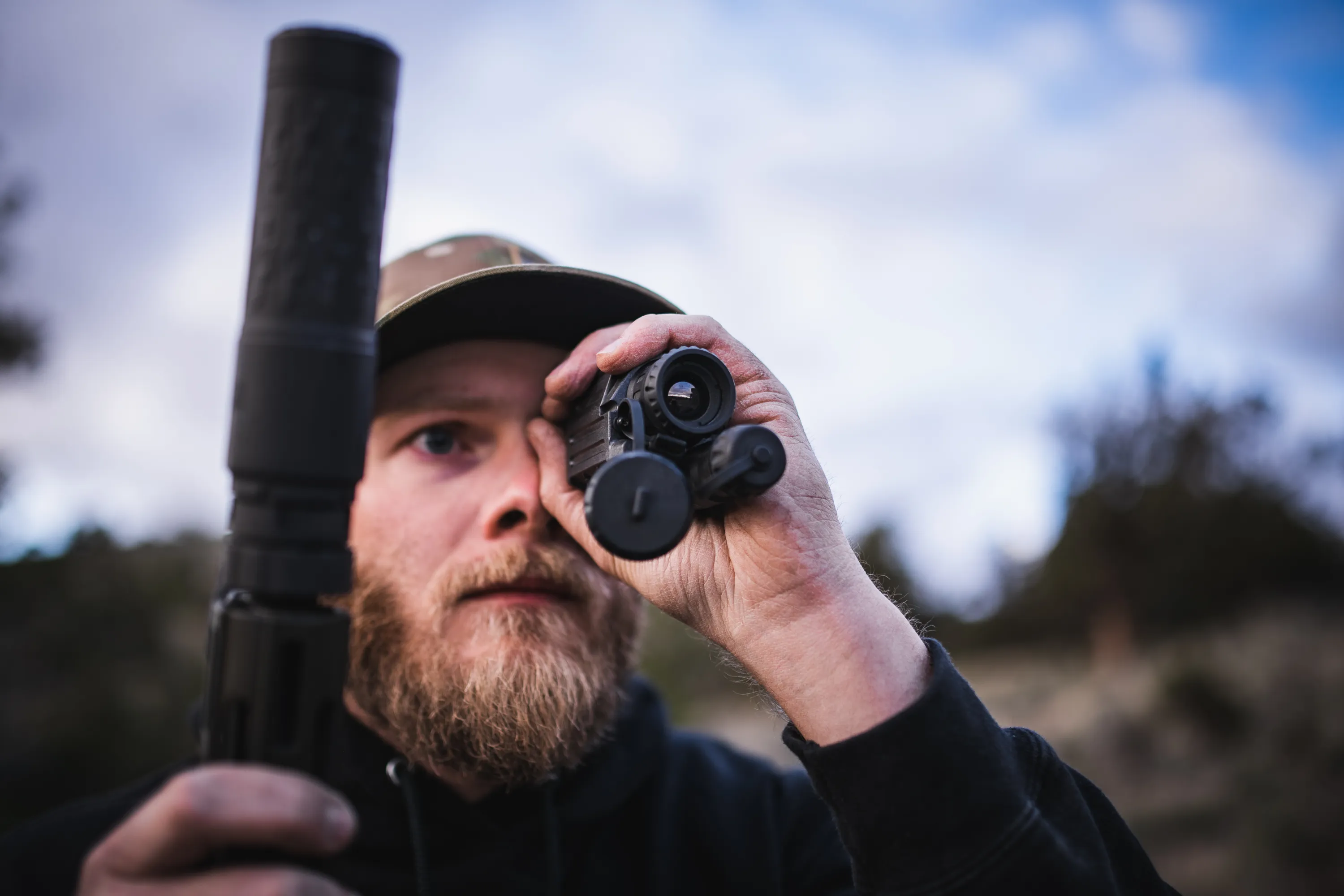
Thermal monoculars detect emitted heat while night vision devices amplify ambient light. That core difference determines appropriate use and expected trade-offs. Thermal excels in total darkness, through light fog and foliage, and for detection-focused tasks where contrast matters. Night vision provides finer visual detail and grayscale imagery useful for close-in identification under moonlight. Choose based on detection versus identification needs, the typical obscurants you’ll face, and your operational tempo. The short checklist below helps match technology to application.
- Choose thermal when you need detection through darkness, fog, smoke, or foliage.
- Choose night vision when you need finer scene detail or grayscale imagery under available light.
- Use both when missions require long-range detection plus close-range identification.
This decision matrix helps buyers prioritize sensor type, resolution, and refresh rate based on actual use cases rather than marketing labels.
| Device Type | Detection Mechanism | Best Use Cases |
|---|---|---|
| Thermal monocular | Heat detection (IR) | Detection in darkness/obscurants, search & rescue, security |
| Night vision | Light amplification | Close-range identification, grayscale detail under starlight |
| Hybrid approach | Combined sensors/software | Missions needing both detection and identification |
What Are the Key Technology Differences Between Thermal Monoculars and Night Vision?
Thermal sensors use microbolometers to measure infrared radiation and show heat contrasts, while night-vision intensifier tubes amplify visible and near-infrared photons to form an image. Thermal is less dependent on ambient light and more effective against obscurants; night vision offers greater scene detail when some light exists. Common trade-offs include cost, resolution, and identification distance: thermal often gives superior raw detection range, while night vision supports finer visual identification within its usable light conditions. Understanding these mechanisms makes choosing between detection-focused and identification-focused systems straightforward.
This technology overview highlights thermal imaging’s broad applicability beyond military roles and its ability to overcome illumination limits that challenge traditional greyscale and RGB cameras.
Thermal Cameras: Applications and Technology Overview
Thermal cameras are passive sensors that capture infrared radiation emitted by any object above absolute zero. Originally developed for military surveillance and night vision, falling prices have opened a wide range of civilian applications. Using thermal sensors removes the illumination constraints of conventional greyscale and RGB cameras. This survey overview covers current applications—animals, agriculture, buildings, gas detection, industrial uses, and both detection and recognition of people—and explains the nature of thermal radiation and thermal-camera technology.
Thermal cameras and applications: a survey, R Gade, 2014
Knowing each technology’s strengths helps you choose devices that match mission profiles; the checklist below summarizes those points.
Which Conditions and Applications Are Best Suited for Thermal Monoculars vs. Night Vision?
Thermal is best for complete darkness, fog, smoke, and locating camouflaged or wounded animals. Night vision is preferable when grayscale detail and finer identification are required under available light. Applications such as perimeter security, search and rescue, predator control, and ethical game tracking generally favor thermal detection, while tasks needing facial recognition or color/signal discrimination may require night vision. To decide: define your primary mission, list likely obscurants, assess required identification detail, and prioritize sensor sensitivity, refresh rate, and portability.
If you’re ready to explore gear, consider Armasight’s lineup of compact and higher-resolution thermal monoculars built to suit these applications. Armasight emphasizes USA-built dependability, practical innovation, and straightforward operation—qualities that help buyers reduce procurement risk and match equipment to real-world needs.
Frequently Asked Questions
What is the typical range of thermal monoculars?
Range varies with model and sensor quality. Consumer thermal monoculars commonly detect heat signatures from roughly 300 to 1,500 yards; high-end units can extend beyond that. Environmental conditions, target size, and thermal contrast also affect detection. Pick a model whose range aligns with your primary use—whether hunting, surveillance, or search and rescue.
How do I maintain my thermal monocular?
Routine care is straightforward: clean the lens with a soft, lint-free cloth and avoid harsh solvents. Store the unit in a cool, dry place and remove batteries if the device will sit unused for long periods. Install manufacturer firmware updates when available and visually inspect the housing and optics before critical use to ensure reliability.
Can thermal monoculars be used in heavy rain or snow?
Many thermal monoculars are weather-resistant, but heavy rain or dense snowfall can reduce effectiveness by masking heat signatures. Light rain or snow usually has limited impact, but for extreme conditions check the manufacturer’s IP rating and choose models built for rugged environments when reliable operation in severe weather is required.
Are thermal monoculars suitable for wildlife observation?
Yes. Thermal monoculars let you detect animals without disturbing them, since they don’t rely on visible light. That’s especially useful at dawn and dusk when wildlife are most active. Thermal tools also reveal movement patterns and activity, making them valuable to researchers and enthusiasts—while reminding users to follow ethical guidelines to avoid stressing animals.
What should I consider when choosing a thermal monocular?
Key factors are detection range, resolution, and battery life. Higher resolution gives clearer images for identification; range matters for hunting or search tasks; and battery life affects how long you can operate in the field. Also consider portability, weight, ease of use, and the manufacturer’s reputation and warranty.
Can thermal monoculars be used for home security?
Yes. Thermal monoculars enhance home security by detecting intruders in complete darkness and through light obscurants like fog or smoke. They help reduce false alarms by distinguishing living targets from inanimate triggers. For comprehensive protection, many homeowners pair thermal devices with other surveillance technologies to build a layered security solution.
Conclusion
Thermal monoculars offer distinct advantages for detecting heat signatures and improving safety and efficiency across applications—from hunting to law enforcement. Their ability to operate in total darkness and through many obscurants makes them indispensable tools for outdoorspeople and professionals alike. Choose the right thermal device—matching sensitivity, range, and portability to your mission—and you’ll gain clearer situational awareness and better outcomes. Explore Armasight’s selection of thermal monoculars to find models designed to meet those needs.